A Policy Problem Is Not Yet a Policy Goal
Turn a broad public concern into a defined policy goal by naming the condition to change, the people affected, and the result public action should produce.
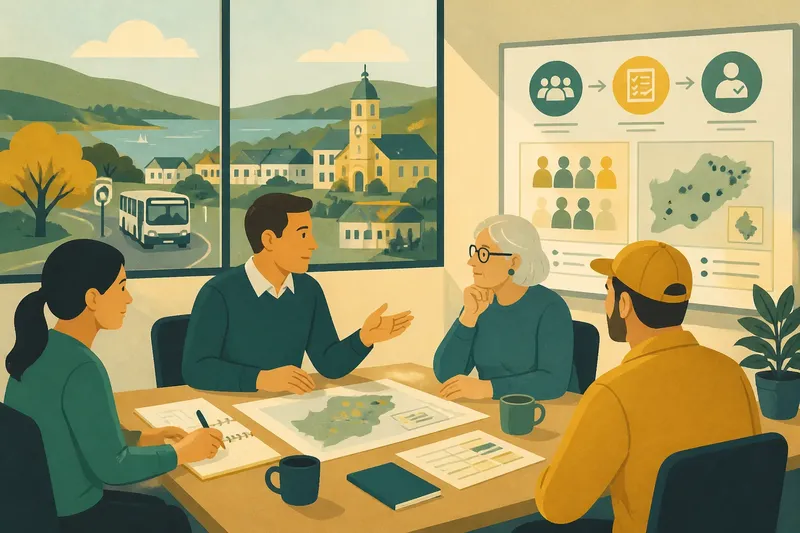
A policy problem is not yet a policy goal. If a regional council says “young people are leaving,” it has named a concern, but not what public action should change. To define a policy goal, separate the condition you want to alter from the result you want people to experience.
What is the condition you want to change?
Start with a plain description of the condition, not a preferred program. “There are too few apprenticeships” may already assume the answer is to create placements. The underlying condition might instead be that school leavers cannot find paid routes into local work, or that employers struggle to reach qualified applicants.
Write the concern as an observable statement that does not prescribe a remedy. Avoid labels such as “poor engagement” or “weak services” unless you can explain what someone would see or encounter. A condition should be specific enough that two people could discuss whether it exists without first agreeing on a policy.
- Describe what is happening, rather than who is to blame.
- Name the setting: a district, service, group, or point in a process.
- Separate the condition from its possible causes.
- Record what is known and what remains uncertain.
Say you are reviewing complaints about missed appointments at a rural clinic. “Patients do not attend” describes an observed condition; “patients need reminder texts” proposes a response. Keep the first statement and investigate plausible causes, such as travel arrangements, scheduling, or unclear notices, before choosing an intervention.
Who experiences the condition, and in what way?
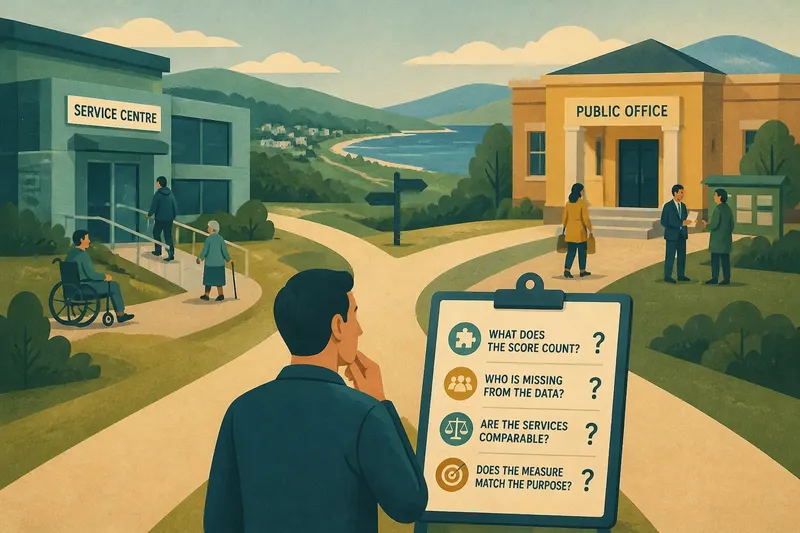
A broad concern often hides different experiences. Residents in a remote settlement may face a long journey to a public office, while people in the regional center may struggle to get an appointment during working hours. Treating both as a single access problem can conceal which barrier a policy goal should address.
Specify the people affected and the relevant circumstances without turning a group into a problem. “Families with limited access to early-childhood care” describes a situation more clearly than “hard-to-reach families.” Note who is affected directly, who bears a related cost, and who may be missing from the information available to the institution.
Use sources suited to the question: service records can show where demand is recorded, while interviews or community meetings can clarify how people encounter a process. Each source has limits. A record of completed applications, for instance, cannot describe people who never managed to apply.
What result should public action produce?
Now state the intended result in terms of a changed condition for people or institutions. A goal is not the activity the government plans to carry out. “Open a regional information desk” is an output; “residents can identify the correct office and submit a complete request without being sent between agencies” describes a result the activity is meant to support.
Keep the result connected to the problem, but do not claim that one policy action controls every influence on it. A regional employment initiative may help people reach training, while transport, employer demand, and family responsibilities also shape whether they can take part. A credible goal describes the contribution public action seeks to make, not an outcome it cannot command.
Draft a sentence with three parts: the people or place, the condition to change, and the intended result. For example: “For residents of outlying communities, reduce the difficulty of accessing municipal advice so they can resolve routine requests without an unnecessary trip to the regional center.” The sentence gives a policy direction without choosing a particular delivery model.
How can you tell a goal from a target or an activity?
These terms serve different purposes, and mixing them makes policy documents harder to assess.
- Problem: the condition that needs attention.
- Goal: the result public action seeks to advance.
- Activity: what an agency does, such as holding advice sessions.
- Target: a specified level or deadline used to track progress.
- Indicator: evidence used to judge whether change is occurring.
A target can help make a goal accountable, but it does not replace the goal. Before setting one, establish what evidence is available, what it can reasonably represent, and who will use it. A count of advice sessions, for example, records activity; it does not by itself establish whether residents’ access to useful advice improved.
What should you check before adopting the goal?
Use these questions to test the draft before it enters a policy plan:
- Is the problem observable? Can you describe the condition without naming a solution?
- Is the affected group clear? Would a reader know whose experience the goal concerns?
- Does the goal describe a result? Could it remain relevant if officials chose a different activity?
- Is the result within public influence? Does the wording avoid promising control over factors outside the institution’s reach?
- Can progress be assessed? Is there a plausible source of evidence, with its limits understood?
- Could the wording shift responsibility unfairly? Does it describe barriers without implying that affected people are at fault?
If a draft fails one of these checks, revise the wording before debating programs. That keeps discussion focused on the intended change rather than on defending a favorite proposal.
How should you refine a policy goal?
Can a goal be broad and still be useful?
Yes, if it identifies a clear result and a population or place. A broad aspiration such as “improve community well-being” gives little direction; a goal about making essential local services easier to reach gives officials and residents something more concrete to consider.
Should the goal name a particular policy tool?
Usually not at the drafting stage. Naming a grant, office, or digital portal too early turns the goal into a commitment to one method before decision-makers have compared the available responses.
What if the causes of the problem are disputed?
Keep the condition and intended result distinct from explanations that remain uncertain. State the known concern plainly, then identify what the institution needs to learn before selecting an intervention.
When should a goal be revised?
Revisit it when the condition changes, the affected group was described too narrowly, or evidence shows that the stated result no longer addresses the concern. Revision is a way to keep policy aligned with the public problem, not an admission that the original wording was useless.
How does a defined goal improve policy design?
A clear policy goal gives officials a fair basis for comparing options. They can ask whether a proposed measure plausibly advances the stated result, what trade-offs it creates, and what evidence would help judge its contribution. Residents can also see whether a plan responds to the condition they raised or has quietly substituted a different aim.
Return to the original concern whenever a proposal becomes attractive simply because it is familiar or easy to announce. A well-defined policy goal keeps the decision anchored in the change people need, while leaving room to choose and revise the means. That is the practical value of separating a policy problem from a policy goal.